a few more thoughts
So, is this my ‘happily ever after’ in commuting?
It is difficult to predict the future with any degree certainty, but one can always use data from the present to perform a predictive analysis. So, let’s begin plotting! Ever since I moved to Boston in 2021, the subway crowds have been growing exponentially. I’ve been told this is just the return to normal pre-pandemic crowds. The frequency of trains during peak hours has also reduced, only making matters worse. In off-peak hours I have ended up on deserted coaches with rather sketchy, inebriated humans, hurling expletives and air-kicks at their imaginary enemies. Then there are slow zones, which make the rickety old trains feel even jerkier. The whole atmosphere in general feels rather dark, dilapidated, unhygienic and at times unsafe too. The commuters are sporadically teased with glimpses of the new trainsets, but like many other public projects, this has also been plagued with delays. Fitting the curve on this dataset does not look very promising, does it?
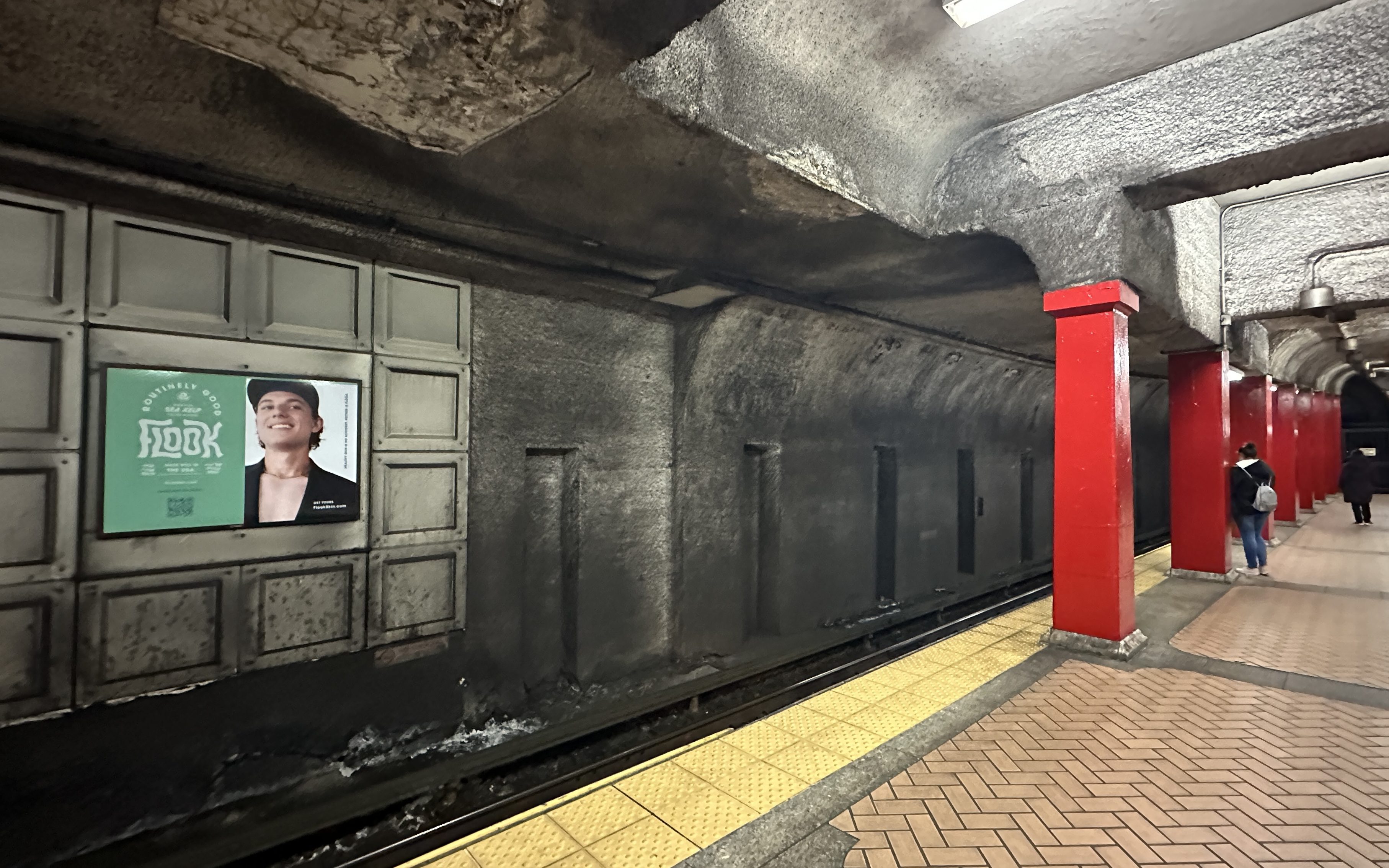
It is sad that this is the state in America’s first subway, in it’s arguably most quasi-European city. And things aren’t all that better in other cities either. I wouldn’t be surprised if this is because all the funding is being prioritized for some automobile-friendly decision, like adding more lanes on roads for the ever growing cars – by numbers and size. Like we don’t have enough of those gargantuan F4x37.5’s on our city streets already!
You can perhaps sense some elevated frustration in my tone. Yes, like with many others, the internet has also had its share of radicalization effect on me. This was through endless suggestions of videos[1] on the importance of public transport and urbanism, whilst condemning car-dependency. It began in search of an added justification for giving up my car and carried on as a means of validation afterwards. Regardless of my bias, the fact remains that lobbying by the auto-industry, along with misleading advertising, were major factors behind the degradation of rail infrastructure in this country. Sure, cars offer a fast, convenient and “safe” method of commuting . But we can hopefully agree that commuting on single-occupancy vehicles, for several miles daily, from a remote suburb, while idling away in standstill traffic, cannot be good for the planet. My Indian friends might remember those memes from the early lockdown days, when the pollution had cleared up so much, that Mt. Everest was visible from Mumbai! On the other hand, trains, if designed and managed well, provide a faster, safer and more sustainable commuting option. They have dedicated tracks independent of traffic snarls. And not to mention, they have at their helm, a qualified operator making it less susceptible to drunk driving, road rage and speeding.
So is there any way car dependency can reduce at the cost of increased public transit usage? It is definitely an uphill battle, that may seem like a lost cause. We are talking about decades of infrastructural evolution, driven by unnatural selection of the rubber tires, cannibalizing the iron wheels and pushing it towards extinction. Most American cities have no rail transport options and the few existing systems are either old and crumbling or limited due to suburban sprawl; making it imperative to own a car anyway. But the journey has to start somewhere. There is no question that the government needs to build more public transit networks, at least in the cities where it is feasible and do more to improve the existing ones. Of course that is easier said than done considering all the other pressing socio-economic issues and all the politics.
Can we do anything from our end to influence this? Just move to Boston, stop driving, give up your cars and live a more European lifestyle. Fair deal, right? I am kidding, of course! I will say this though – if not directly you can indirectly impact things. After all, this is a capitalist society and most of the $$$ flows to where the demand is. So, for starters, if you have a decent public transport option, maybe try to utilize it, albeit occasionally. If that is not possible, then at least refrain from supporting any blocking of efforts towards building a better transit systems.
This might be crossing a controversial line, but the political side of things have a major impact. To even begin mitigating the damage done by generations bygone, the officials need to be empowered to make public transit-friendly decisions. The question though, is that do most people even want that alternative? Perhaps not? I get that most residents are happy with the current car-dependent version of USA and for a good reason. Aside from the comfort factor, owning a car is a lifelong dream for many, passion for some and status symbol for a few. It is the only way of life that many know of and have grown up with. That’s fair! But there is no harm in learning better ways from around the world. Cars and trains can coexist. I talked about Germany and Japan, but even several Asian and African countries, which are stereotypically dismissed as third world nations, have now built highly advanced transit systems, serving a multitude of people. The thing is, even if you don’t need it, there are others who do. Not everyone can afford to drive. And I cannot stress this enough, but not everyone wants to drive either. This is the minimum level of mentality shift needed and that begins with us, our choices and our allegiances!
That is enough of unsolicited and unmerited preaching from me! After all, it is easy for a responsibility-free male engineer to lecture on urbanist living, after only a year of doing so. Also, it is not as if I chose the T with the pure intention of resurrecting the environment. I drove everywhere when I was in Cincinnati, including places that were arguably walkable. Why? Because I did not enjoy the experience of being the only one walking on the narrow sidewalk of a 4-lane boulevard, with the Doppler effect of zooming cars, giving me my audio-sensory stimulus. I felt naked without a car, exposed to the leers of society, suited up in their SUVs. Could I have taken the bus? H*ll no! A 1-hour multi-leg, rickety bus ride vs. a 15-min direct drive to the same destination? Come on, Midwest, get your act together! (& I hate buses) Ultimately, I chose to give up my car only after having the privilege of living in the heart of Cambridge, near the busiest subway route, which drops me right at my office doorstep in 20 mins. There were additional factors like Boston’s cost of car-ownership and traffic snarls. And of course I only focus on commuting on trains here, because I have been not been great with regards to the many other aspects of sustainable living. Finally, I also cannot promise that this will be my lifestyle forever.
In conclusion, I may be no one to encourage people to get out of their cars, but there is still a dire need for better public transportation in the US. I have gone on a negative rant above, but I must admit that it is encouraging to see many major US cities focusing on transit oriented redevelopment off late. Even in Boston, I have had the fortune to stumble upon the swanky new trainsets, which are slowly rolling out. Hopefully this momentum is not lost and leads to some form of a renaissance.
I will end with a famous quote from a former mayor of Bogota –
“A developed country is not a place where the poor have cars. It’s where the rich use public transportation.”
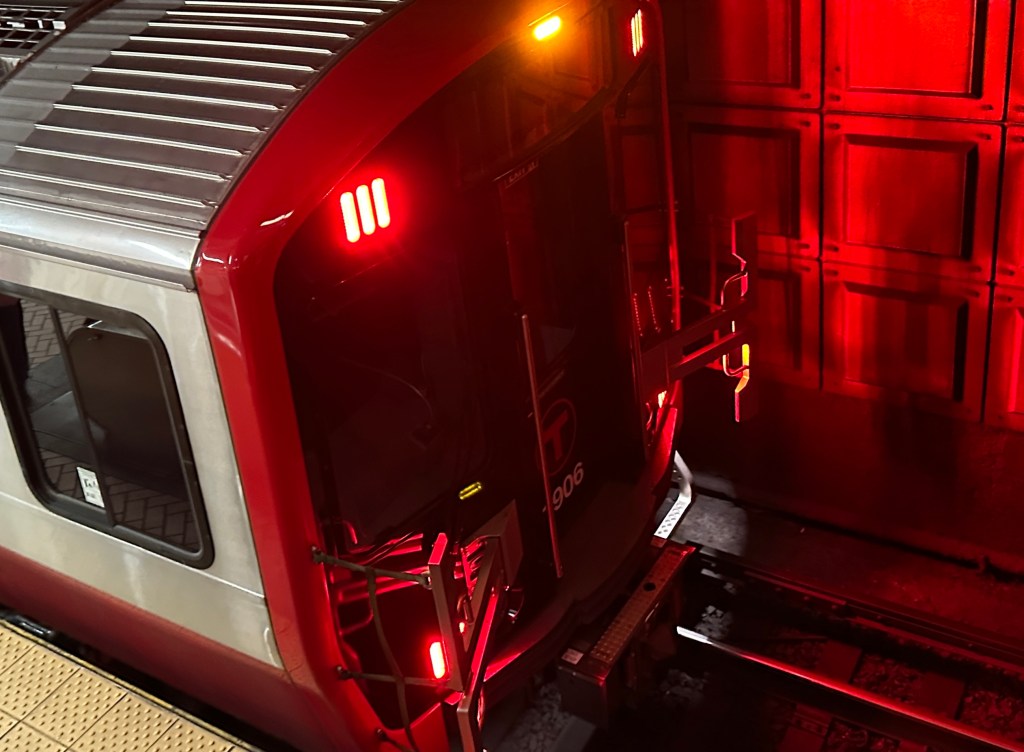
The Swanky New 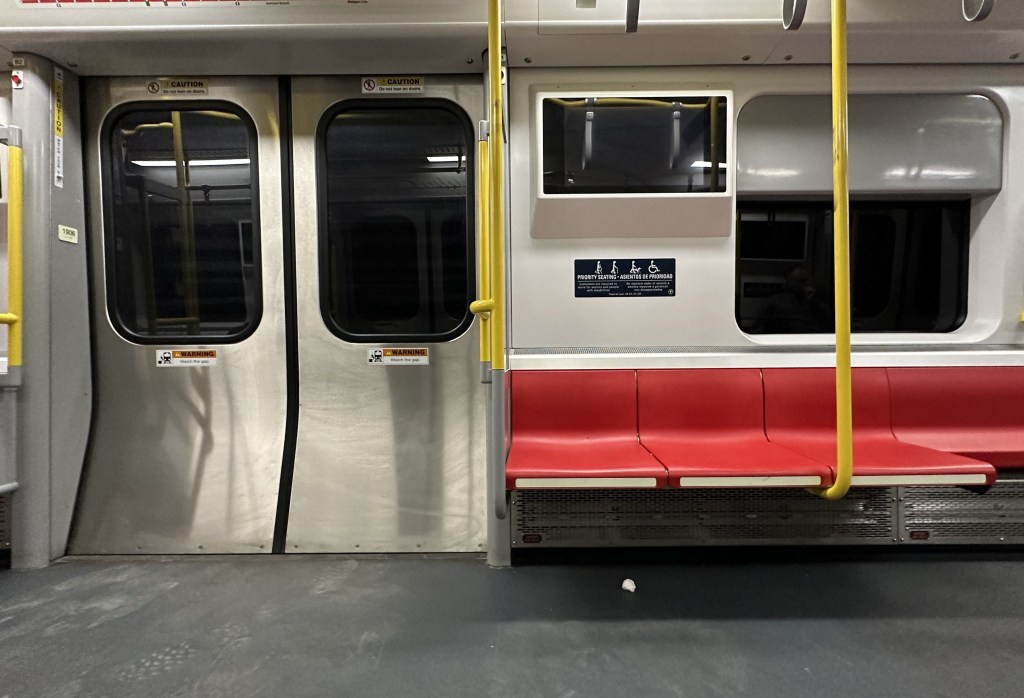
Red Line Trainset
[1]Some good YouTube channels on Public Transportation include:
Post-credit scene
After a normal day at work, Prady decides to head back home. Harry Style’s recent hit “As it was” is playing on his device. At the T-station, he sees that the next train is a maddening 12-mins away. As he curses the system, the verse “Leave America” aptly pops up at that moment. “Not the answer Prady was looking for, Harry!” He switches to a cricket podcast, as music wasn’t doing it for him. The crowd continues to build, and the train finally arrives. He somehow finds a seat and proceeds to solve today’s Wordle. It is a tough one and it takes him up till Downtown Crossing to complete it – 1 station late. The train soon pulls into Park Street. He unexpectedly gets up and disembarks, nowhere close to his stop. That is weird. Where is he going?
The Green Line tram network connects through this stop. There are a few car-dealerships on the Western side, at the end of that line. Could he be headed there? Has he had enough?
But then again, right outside is the famous Boston Commons – a bustling urban park, which is also a great sunset spot, against the backdrop of the Back Bay neighborhood. Also, not too far from the park, is Newbury Street – a walker’s paradise which is home to a cornucopia of cafes, retail stores and ice-cream shops, including Prady’s favorite – Amorino’s Gelato. He can also walk up to the Charles River Esplanade, via the quaint cobblestone streets of Beacon Hill…
Prady reaches the upper-level platforms where the screeching Green Line trolleys arrive. Does he board the Westbound train? Or will he take the exit up the staircase that leads to the Commons?
 Pravel
Nice post 🙂 The daily commute is certainly a universally shared experience…and there is just something about experiencing it while listening to your own soundtrack 🙂 Keep writing…hope all is well.
LikeLiked by 1 person